Volatility expansion is where the fastest, most profitable trades live — and where fakeouts punish the impatient.
A breakout is price moving decisively outside a defined support or resistance level, usually accompanied by a jump in volume and volatility. Breakouts are how every pattern in Modules Ten and Eleven actually pays off — the pattern builds the setup, the breakout is the trigger.
Entering long
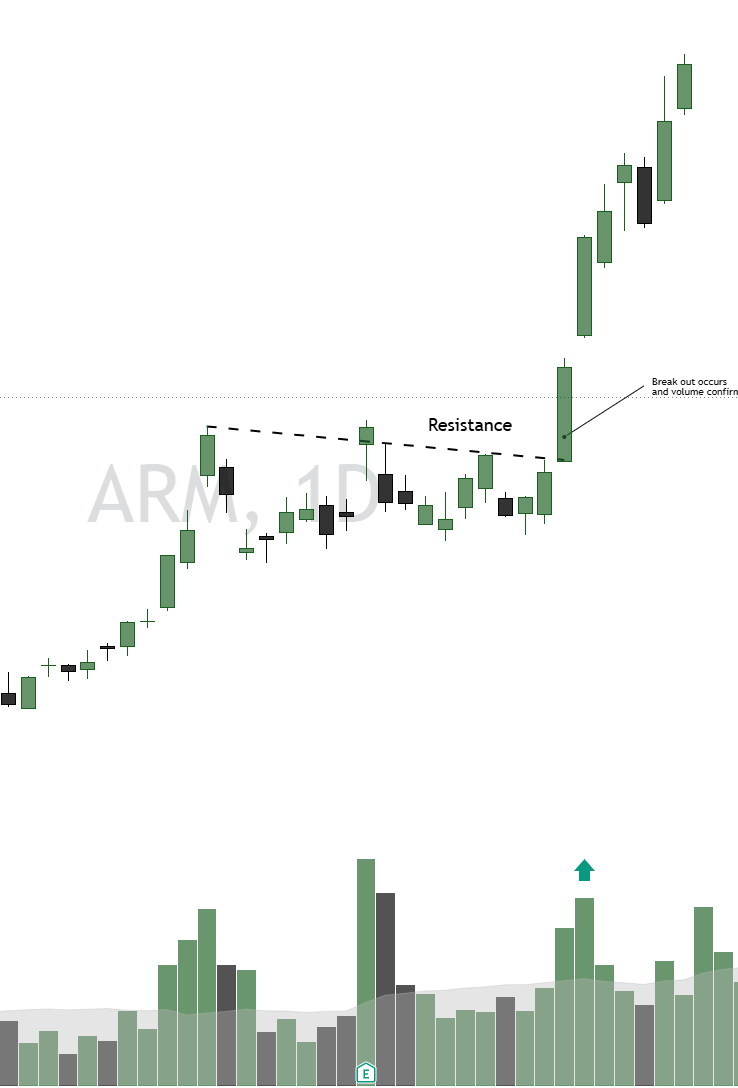
When a candle closes above resistance with supporting volume, a long entry is triggered. The stronger and longer the level being broken has held, the more explosive the resulting move tends to be.
Entering short
When a candle closes below support with supporting volume, a short entry is triggered. Same logic, opposite direction — the level’s history is what makes the break meaningful.
Confirming a Breakout
There are two confirmations we require, every time, before trusting a breakout:
InteractiveConfirmation checklist
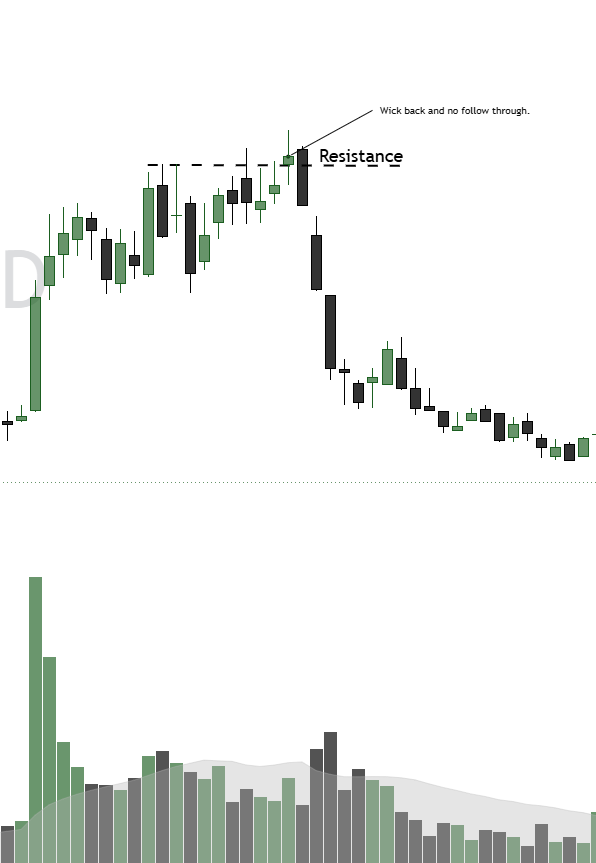
If you can’t tick both, you don’t have a breakout — you have a candle that poked through a line.
ARM — a valid breakout. Price closes above the level on expanded volume and holds. The close is what counts, not the touch.HYLN — a fakeout. The same level, pierced intrabar and rejected by the close. Anyone who bought the wick is now trapped above the range.
Retests
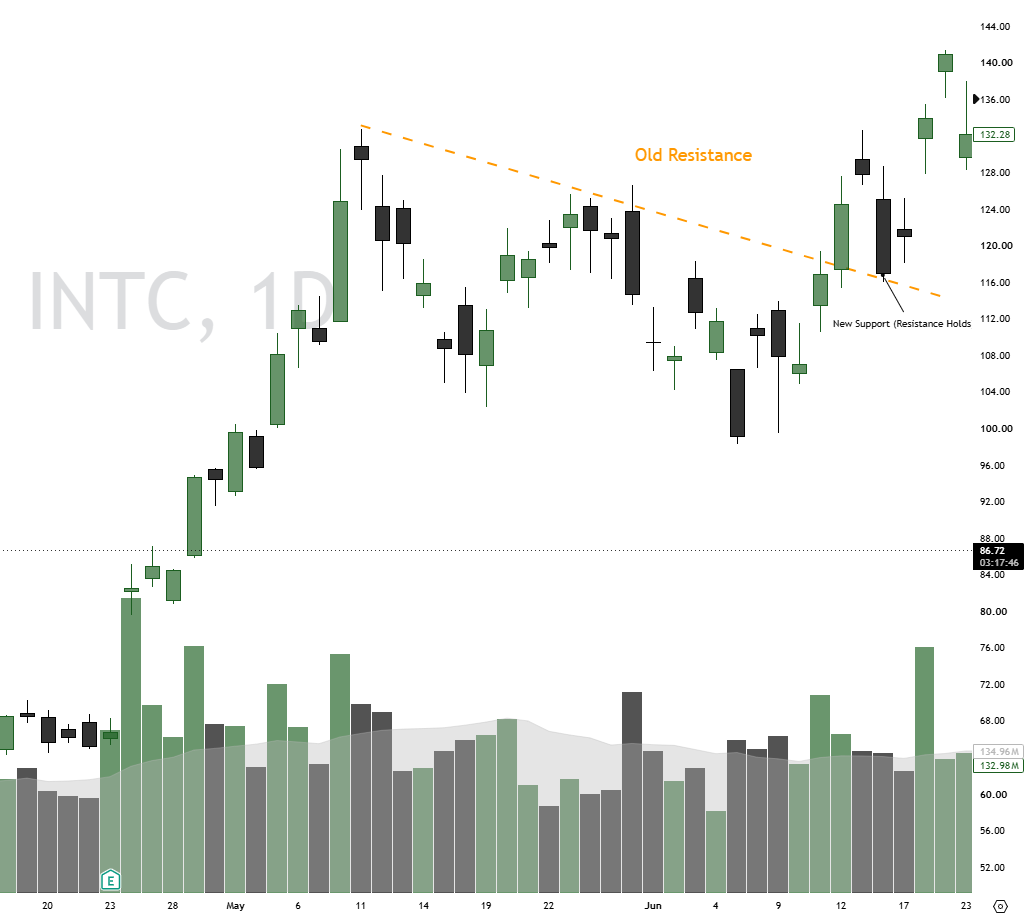
In most breakouts, price eventually comes back to test the level it just broke. If that old resistance holds as new support (or old support holds as new resistance), you have your confirmation and often a better-priced, lower-risk entry than chasing the initial move.
INTC — break, retest, continuation. The retest is usually the better entry: the level has proved itself, and the stop sits just beneath it.
Trade it with us
Try the full TQE for $15
7 days of the full membership: the indicator suite, Gamma Levels, alerts, the private Discord and the live sessions. Cancel any time.